
Never get
short-shipped again.
Dump the carton. Walk away. Verified. The Match Scanner Receiving Machine checks every package against your supplier invoice and catches every short, missing, or wrong item.

The prototype, drawn for the workshop
Nobody checks the delivery. The losses never surface.
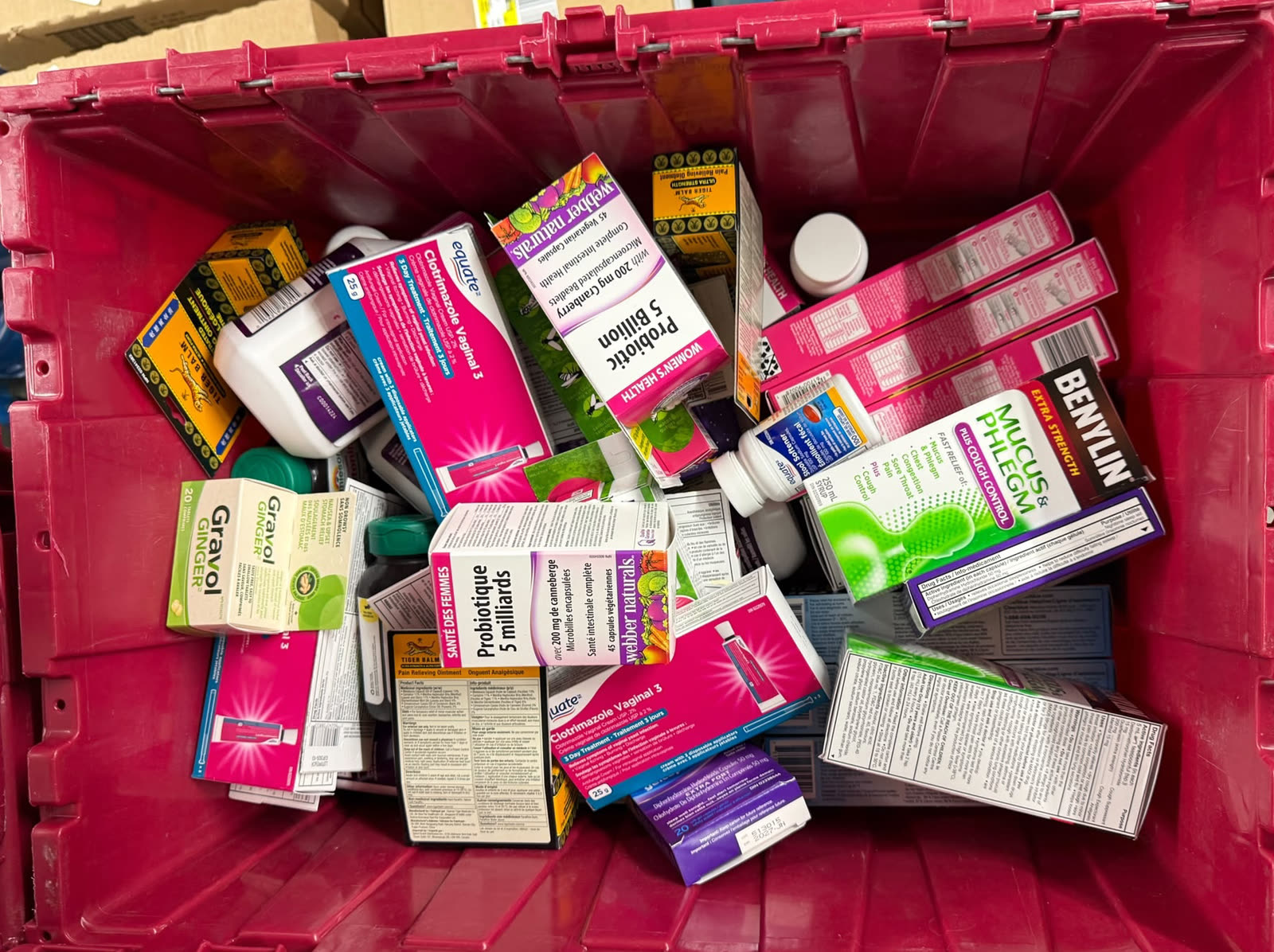
Receiving a shipment by hand takes too long, so staff sign for what the invoice says arrived, and short-shipped, mis-picked, or substituted items quietly become shrink.
Verification doesn't happen
Checking dozens of totes item by item costs more staff time than most locations can spare, so the invoice gets trusted by default.
Claim windows close fast
Supplier shortage claims expire within days of delivery. A discrepancy found next week is a discrepancy you absorb.
The cost stays invisible
Because nothing is measured, nothing is disputed. The loss shows up as unexplained shrink at the end of the year.
Five steps. One of them is yours.
The operator empties the carton into the hopper and collects the items underneath. Everything in between runs on its own, and the finished report reaches your manager without anyone standing over the machine.
Dump
Empty the shipping carton into the top hopper. No sorting, no orienting, no scanning.
Separate
A camera meters the hopper tilt, and progressively faster belts stretch the pile into a spaced stream.
Capture
Each package passes a five-camera arch under polarized strobes, five of its six faces imaged in motion.
Identify
Barcode, printed text, package artwork, measured size and weight are fused and matched to a line on your invoice.
Reconcile
Expected versus received, line by line, with per-item photos as claim evidence. The finished report is emailed to your manager automatically.
Separating the packages is what makes the AI reliable
Five faces, not one
A barcode faces up in only a fraction of a random pile. A package travelling through the arch presents five of its six sides, so the code is found wherever it was printed.
The invoice narrows the search
The question is never "which of half a million products is this?" It is "which line of today's invoice is this?" That is what separates near-identical pack sizes and strengths.
Counted exactly once
Items are counted only on a sensor-confirmed pass. A checkweigher and beam sensors catch two packages travelling as one, and any jam quarantines its items for re-verification.
Counting isn't the hard part. Mixed, unlabelled cartons are.
Counting identical items is a solved problem. A weight scale does it in seconds. What nothing on a back-room budget does is take an unsorted carton and identify, count, photograph, and reconcile every package without a person touching each one.
| Capability | Counting scale | Scanner + prep software | Industrial vision system | Match Scanner |
|---|---|---|---|---|
| Count a batch of identical items | Best, in seconds | Slow · scan & type | Yes | Fine |
| Identify mixed items with no pre-sorting | No | Manual, one by one | Yes | Yes |
| Per-item photo evidence | No | Manual capture | Sometimes | Automatic |
| Reconcile against the invoice or manifest | No | Yes · manual entry | Enterprise integration | Automatic |
| Price & who buys it | ~$300 · anyone | Monthly software | Quote-priced install project | Countertop appliance · the owner |
The bottom line: Match Scanner is the only option here that takes a mixed, unsorted carton and identifies, counts, photographs, and reconciles every package on its own, at a countertop price, not a five-figure install. The technology is the same family used in a big industrial vision line: global-shutter cameras, strobed polarised lighting, an encoder-timed belt, object tracking. The difference is the form factor and the price, a fixed-geometry appliance that configures itself from your invoice instead of an integration project engineered for one customer's line.
It never reports a count it isn't sure of
Uncertainty becomes a question, not an error
A verification tool is only worth having if its output can be trusted in a dispute with a supplier. One confidently wrong count destroys that, permanently.
So the machine separates what it knows from what it doesn't. Items identified with high confidence are reported as verified. Anything ambiguous (an unreadable code, a blocked view, a suspected double) is set aside for a human to glance at, with its photos attached.
Every one of those human answers is also how the system gets better at the products your location actually receives.
Serialization checks belong in the same pass
US pharmacies must handle package-level serialization data under the Drug Supply Chain Security Act, and wholesalers already transmit that data electronically ahead of each shipment.
Because the machine already images every face of every package, reading a 2D DataMatrix code and checking it against the shipment file is the same pass of work, not a second process. Serialization verification is planned alongside receiving reconciliation.
The date the FDA's exemption for small dispensers ends and package-level requirements apply. Confirm your own obligations with your compliance advisor.
Frequently asked
Can I buy one today?
Not for delivery yet. The machine is in development. You can pre-order one now to reserve a unit from the first production run and lock in early-order pricing; you are under no obligation until the machine ships and you confirm. Everything on this page describes design targets and intent rather than a shipped product.
Do I need the Match Scanner app as well?
Yes. The machine is a capture device for the Match Scanner platform. Invoice matching, discrepancy reports, audit trail, and analytics all come from the software you can use today. The app also remains the right tool for spot checks and locations that do not need a machine.
What happens if it can't identify something?
It flags the item instead of guessing. Flagged packages are shown on the operator tablet with their photos so someone can confirm them in a few seconds. A count is only ever reported as verified when the system is confident in it.
What if a package jams?
Motor load is monitored continuously; the belts stop and reverse automatically, the lid opens without tools, and any items affected by the jam are quarantined for re-verification so nothing is counted twice or missed.
Will it damage the packaging?
The mechanism was chosen specifically to avoid it. Nothing grips, lifts, or flings a package. Items slide from a gently tilting hopper and travel on belts, and the largest drop anywhere in the path is a few centimetres.
Why not just use a counting scale or a barcode scanner?
Use both, for what they're good at. A counting scale is the fastest way to count a batch of one identical item, and a scanner is fine when someone has time to pick up and scan each package. This machine is for the case they don't cover: an unsorted carton of different products that has to be identified, counted, photographed, and checked against the invoice without a person handling each item. Bigger industrial vision systems do this too, but they're custom installations that cost five or six figures. This brings the same capability to a countertop.
Does it work with my supplier's invoices?
That is exactly what the Match Scanner platform already does. Suppliers and formats vary, so invoice ingestion for your specific wholesalers is something we confirm with you as part of onboarding.
Is it only for pharmacies?
Pharmacy receiving is where we are starting, because the mix of small rigid cartons and the cost of an unnoticed discrepancy line up well. The same approach applies to other retail and distribution settings, and those come later.
Reserve an early machine for your back room
Pre-order now to hold one of the first units and lock in early-order pricing. No obligation until it ships and you confirm. Tell us about your receiving process and we will follow up with pre-order details.
Or email [email protected] directly.